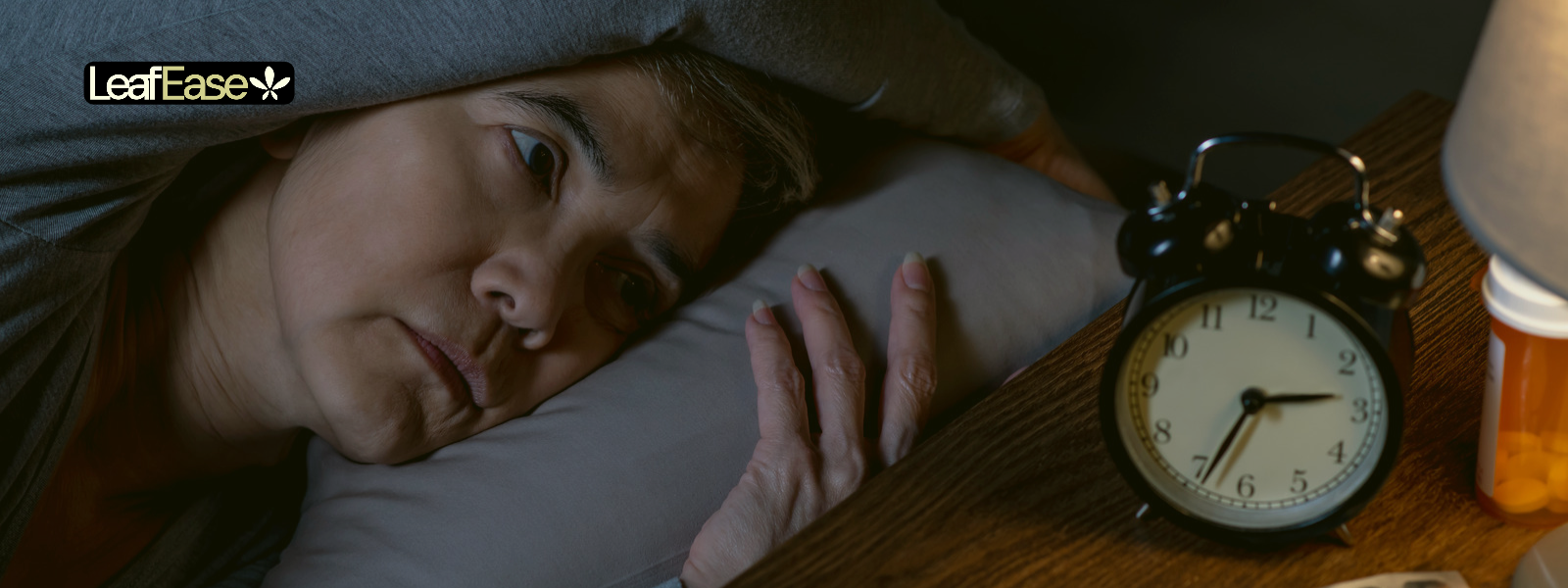



Lying awake night after night, or waking exhausted and unrefreshed, is its own kind of drain even before you start thinking about treatment. If you have been struggling with persistent poor sleep and are wondering whether you can seek a medical cannabis assessment without a formal diagnosis already recorded, the honest answer is cautious. You may be able to begin an enquiry or pre-screening process, but symptoms alone do not guarantee approval for medical cannabis insomnia without diagnosis in the UK. A specialist needs sufficient clinical information to assess your sleep problem, its possible causes, your treatment history and relevant safety factors.¹
Key Takeaways
- Regular sleep difficulty can deserve clinical assessment even if no formal insomnia diagnosis is already on record.
- A specialist needs evidence about duration, daytime impact, possible causes, current medicines and treatments tried.
- Cognitive behavioural therapy for insomnia (CBT-I) is a recognised first-line approach for long-term insomnia.
- Medical cannabis is not automatically appropriate. Any treatment may need review if morning grogginess or other effects occur.
Do You Need a Formal Diagnosis Before Seeking an Assessment?
Not necessarily to begin a pre-screening or enquiry process, but a clinician needs sufficient clinical evidence to make a safe individual prescribing decision. If there is no documented diagnosis for insomnia diagnosis medical cannabis prescription discussions, the specialist may need further evidence or may advise that you seek formal assessment of your sleep problem first.
Insomnia is defined broadly as persistent difficulty falling asleep, staying asleep or waking too early, with meaningful daytime impact such as fatigue, difficulty concentrating or low mood.¹ Short-term sleep disruption related to a specific event is different from the longer-term pattern that would normally be the basis of a clinical assessment for prescribed treatment.
What a Clinician Needs to Understand About Your Sleep
Sleep problems can have several causes, and a clinician needs to understand more before any assumption about the cause of sleep difficulty. During an assessment, a clinician is likely to ask about the pattern and duration of your sleep difficulty, how it affects your daytime function, whether shift work, stress, anxiety or depression may be contributing, whether pain, breathing problems or restless legs are relevant, your current medicines including anything that affects alertness or sleep, and any substance use.¹
This detail matters because treating an underlying cause, such as anxiety or pain, is often more effective than addressing the sleep symptom in isolation.
Why Previous Treatment Matters
The National Institute for Health and Care Excellence (NICE) identifies CBT-I as a first-line approach for long-term insomnia following sleep-hygiene advice.² What you have already tried and whether it helped is a relevant part of the assessment, not a box-ticking exercise. Sleep-hygiene changes, treatment of an underlying contributing condition, and any prescribed or over-the-counter sleep aids are all potentially relevant.
There is no universal treatment-count rule that applies to insomnia specifically. A specialist decides whether your treatment history is sufficient to support a CBPM assessment on an individual basis. Sleeping tablets being prescribed once briefly is different from a course of CBT-I that produced limited benefit despite adequate engagement.
Records That Can Make the Consultation Clearer
Useful records for an insomnia-related assessment may include your GP notes and problem list where available, your medication history, any therapy records, a sleep diary covering a week or two if you have one, relevant specialist letters such as those from a respiratory or mental health team, and a brief written account of how your sleep affects your daily life.
A sleep diary supports discussion but does not prove a diagnosis. LeafEase explains what medical records are needed for a cannabis consultation and how to gather them in practice.
What to Expect if Medical Cannabis Is Discussed
If a clinician assesses your sleep history and considers a CBPM relevant, they will also consider your full medical picture including other medicines and how they interact, your mental health history, your daytime responsibilities, and whether you drive. Medical cannabis should not be treated as a first-line solution for unexplained poor sleep.
Read LeafEase’s overview of medical cannabis for insomnia for broader eligibility context. If a formulation is discussed, CBD-dominant or lower-THC approaches are generally associated with less next-day sedation than higher-THC options, but responses vary. If morning grogginess or other unwanted effects occur, a treatment review and adjustment is appropriate. You must not drive or operate machinery if you feel drowsy or otherwise impaired, regardless of your prescription status.
If you have persistent sleep problems and a relevant clinical history, you can check whether a specialist insomnia consultation may be appropriate. This is not a promise of diagnosis, eligibility or prescribing.
Frequently Asked Questions
Can I get medical cannabis for insomnia without a diagnosis?
You can begin a pre-screening enquiry, but a specialist will need sufficient clinical information to make a safe individual assessment. If no diagnosis is documented, the clinician may advise formal sleep assessment first. Symptoms alone do not guarantee a prescription.
What counts as long-term insomnia?
Insomnia is generally considered long-term when sleep difficulty persists for three months or more, occurring several nights per week, with meaningful daytime impact such as fatigue, difficulty concentrating or low mood. Short-term disruption related to a specific event or period is typically distinguished from this.
Do I need to have tried sleeping tablets first?
Not necessarily. What matters is a relevant treatment history appropriate to your sleep problem and its context. CBT-I is a recognised first-line approach for long-term insomnia. A specialist assesses what your particular history includes and whether it is sufficient to support an individual prescribing decision.
Can a sleep diary help with an insomnia assessment?
Yes, a diary tracking sleep timing, waking episodes, daytime function and any contributing factors provides a clinician with a clearer picture than a single account at an appointment. It supports discussion but does not replace a clinical assessment or diagnose insomnia.
Will medical cannabis make me groggy the next morning?
Some formulations, particularly lower-THC or CBD-dominant options, are generally associated with less next-day sedation. Responses vary between individuals and can depend on timing, dose and formulation. If morning grogginess occurs, your prescriber can review and adjust the approach. This cannot be guaranteed in advance.
Can I drive if a prescribed treatment makes me sleepy?
No. You must not drive if you feel drowsy, dizzy or otherwise impaired, regardless of whether your prescription is legal. Discuss timing and impairment risk with your prescribing clinician before driving while on any new treatment.
References
1] NHS (2025) Insomnia. Available at: https://www.nhs.uk/conditions/insomnia/ Accessed: 3 September 2026].
2] National Institute for Health and Care Excellence (2024) Daridorexant for treating long-term insomnia: committee papers. Available at: https://www.nice.org.uk/guidance/ta922/documents/129 Accessed: 3 September 2026].
3] GOV.UK (2018) Government announces that medicinal cannabis is legal. Available at: https://www.gov.uk/government/news/government-announces-that-medicinal-cannabis-is-legal Accessed: 3 September 2026].