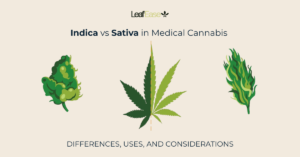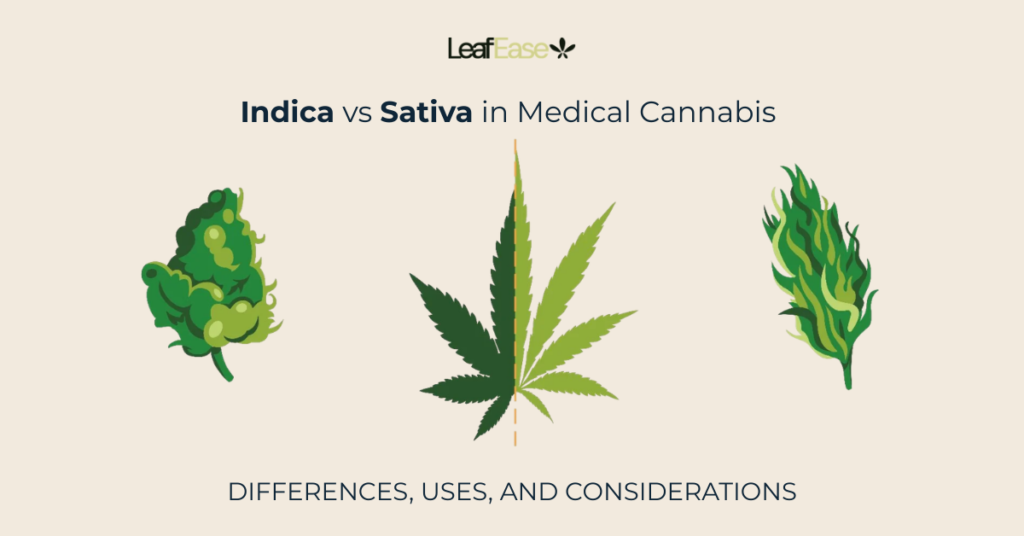
When people ask about Sativa vs Indica, what they usually want to know is how each might fit into their daily life and symptom patterns, not the finer points of plant botany. For people using prescribed medical cannabis, the real focus is whether a product can ease ongoing pain, help them sleep, or make it easier to think clearly and get through the day in a safe, sustainable way.
In medical cannabis, the Indica vs Sativa label is less important than the product’s THC, CBD and terpene profile, plus how it fits your symptoms and daily life.
Key takeaways
- The difference between Indica and Sativa is only a starting point, not the whole story.
- What matters most is how different cannabis profiles actually feel in your body.
- Treatment works best when products are planned around work, rest, and daily responsibilities.
- Medical guidance and monitoring matter more than strain names on a label.
Indica vs Sativa: Key Differences and What These Labels Actually Describe
Most people first hear about cannabis in terms of Sativa and Indica types, as if there are two neat boxes you can drop every plant into.
- Traditionally, Sativa plants are taller with narrower leaves and are often described as producing more energising, “head‑focused” experiences.
- Indica plants tend to be shorter with broader leaves and are usually associated with more calming, “body‑focused” sensations that people link with unwinding or sleep.
In modern medical use, many products are hybrids, and their impact depends far more on their cannabinoid and terpene profile than on whether someone once called them Sativa or Indica.
So, what is the real difference between Indica and Sativa beyond the plant pictures you see online?
Indica vs Sativa: Differences at a Glance
Before diving deeper into how different products are chosen in medical care, it helps to step back and look at the broad patterns people often notice. These patterns don’t hold true for everyone or every product, but they’re a useful starting point for understanding the language used in clinics and packaging.
This table summarises common patterns people notice in Sativa vs Indica products, especially around energy, pain, and sleep.
| Aspect | Sativa | Indica |
|---|---|---|
| General effects | More uplifting, “mind high”; can increase alertness and motivation. | More body‑heavy and calming; may ease physical tension and promote rest. |
| Day vs night | More often explored for daytime use where people want to stay mentally active. | More often explored in the evening or at night when winding down. |
| Pain support | May help mood and distraction from ongoing discomfort for some people. | Frequently preferred for persistent or nighttime pain and muscle tightness. |
| Anxiety & mood | Can lift mood; in some, higher‑THC Sativa can trigger anxiety or racing thoughts. | Often felt as more soothing; too much can feel sedating or “foggy”. |
| Focus & restlessness | Sometimes used (carefully) by adults who struggle with focus or motivation and want more mental drive. | More often used to ease restlessness, overstimulation, and difficulty switching off at night. |
Note: These are commonly reported patterns rather than guaranteed outcomes, and responses can vary significantly between individuals.
Indica and Sativa Uses
For people using prescribed cannabis, the Sativa and Indica label is just a starting point, not the full decision. Modern products are usually hybrids, so two oils or flowers both sold as “Indica” can feel different because their underlying chemistry is not the same.
What really shapes Sativa or Indica effects in medical use is the chemotype (the balance of THC, CBD and other cannabinoids) and the terpenes that can make a product feel more energising, calming, or sleep‑promoting. On top of that, each person’s own context – past experiences with cannabis, other medicines, and sensitivity to anxiety, low mood or sedation – can completely change how a product feels.
1. Indica or Sativa Uses for Ongoing Pain, Tension and Sleep
When people ask about Sativa or Indica, as treatment options for persistent aches or body tension, they’re usually trying to find something that takes the edge off without knocking them out. Many lean towards Indica‑dominant or more balanced products for deeper, long‑lasting discomfort and evening unwinding, while others prefer Sativa‑leaning options for lighter daytime discomfort, fatigue, or low mood when they still need to stay clear‑headed.
Questions like “what is stronger Sativa or Indica for pain?” don’t have a single answer, because “stronger” depends on whether you mean relief, energy, or sleep support.
2. Indica vs Sativa Uses in Attention, Restlessness and Overstimulation
Use of Sativa and Indica can look very different for people who struggle with focus, restlessness, or sensory overload.
When Sativa‑leaning products may support focus
Some adults who live with distractibility and low motivation find that carefully dosed, usually lower‑dose Sativa‑leaning products help them feel more engaged and “on task”. Others have the opposite experience, finding the same profiles too stimulating and noticing racing thoughts or increased anxiety at higher doses. This is why Sativa‑leaning options are usually explored gradually and under medical guidance, and why they should be seen as a potential support rather than a direct substitute for prescribed ADHD medicines.
When Indica‑leaning products may help with switching off
Many people who feel constantly “switched on” or overstimulated prefer calmer, Indica‑leaning or balanced products later in the day to wind down, relax the body, and support sleep. At the same time, doses need to be chosen carefully so that people can stay safe if they are responsible for children, work, or driving, and so they don’t end up heavily sedated. For switching off at night, “stronger” usually means “more calming”, so some people perceive Indica‑leaning options as stronger in that sense.
3. Matching Indica and Sativa Uses to Your Day
Understanding how Sativa and Indica use lines up with your day can make treatment plans more realistic.
In the morning or daytime, some people, under medical guidance, explore lighter Sativa‑leaning or balanced products when they need to stay mentally active and avoid feeling too drowsy. Later in the afternoon or evening, others lean on Indica‑leaning or balanced options to turn down discomfort, ease tension, and prepare for sleep.
Whatever the mix, it works best as a personalised plan that’s reviewed and adjusted over time rather than a fixed “Sativa in the day, Indica at night” rule.
Medical Routes & Practical Considerations
Beyond how Indica and Sativa are used, there are practical considerations around how products are taken, safety, and legal responsibilities.
Medical cannabis treatment does not have to mean smoking. Prescribed products are usually taken as vaporised flower within a treatment plan, oral oils, capsules, or mouth sprays, each with a different onset and duration that can be matched to someone’s routines and goals.
These non‑smoked options are designed to focus on safety, symptom control, and discretion, so people can use medical cannabis without the health risks and stigma that come with traditional smoking.
If you’re new to this topic, our article on what medical cannabis is, how it’s used, and its possible side effects covers the basics.
Safety, Side Effects, and Key Considerations
It’s important to understand the effects of Sativa and Indica on anxiety, alertness and coordination before deciding when and how to use them. Sativa‑leaning, high‑THC profiles can sometimes trigger or worsen anxiety, increase heart rate, cause restlessness, or make it harder to fall asleep, especially at higher doses.
Indica‑leaning options are more likely to cause sedation, slower reaction times, and a heavy or “hungover” feeling if someone takes too much. Extra care is needed for anyone with a personal or family history of psychosis, complex mental health difficulties, pregnancy, regular driving, or when cannabis is combined with other sedating medicines.
In the UK, cannabis‑based products for medicinal use are usually prescribed by specialists when other options haven’t helped, and patients should remain under ongoing review.
How we help you move beyond the label
If you feel stuck in the Sativa vs Indica debate, speaking with a clinician can help you find a safer, more tailored way forward. Rather than relying on trial‑and‑error, our team looks at your symptom patterns, daily responsibilities, past experiences with cannabis, and wider health context before suggesting any products. Together, you can build a plan that focuses on how specific profiles fit your real life, with ongoing review to adjust as your needs change.
If you’d like to see whether you might be suitable for medical cannabis treatment, complete your FREE Eligibility Check.