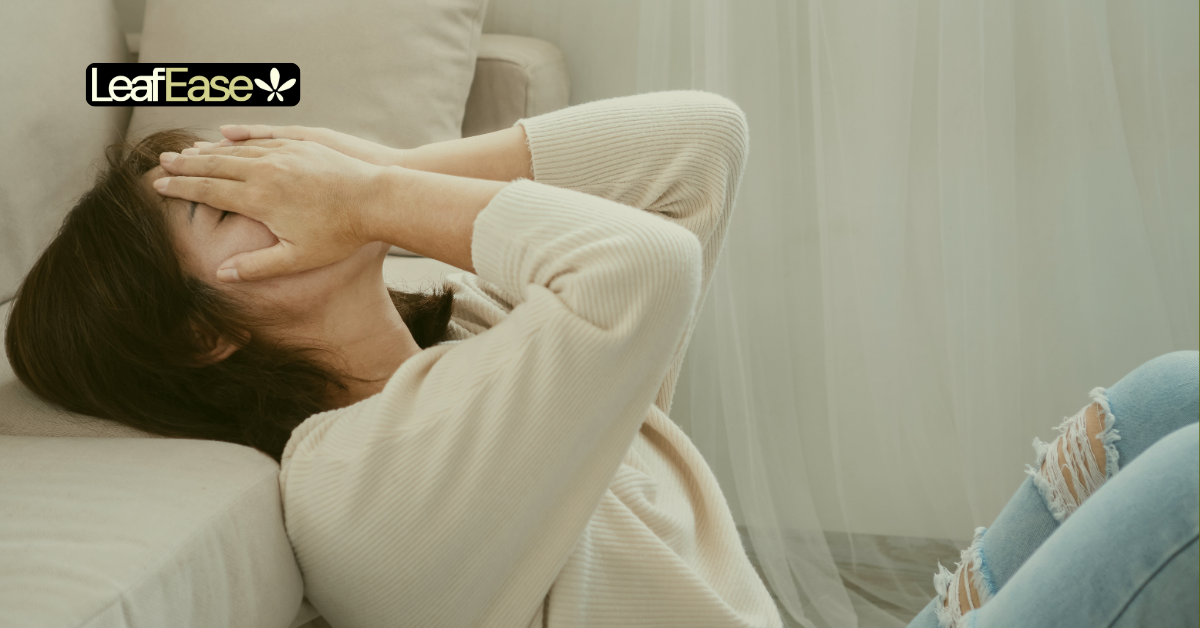
If your anxiety medication isn’t working anymore, you are not alone. The racing thoughts returning at night, the low-level dread creeping back- these are real signals, not imagination. If you have been on a medication that worked and feel it is losing its effect, this is a recognised clinical phenomenon with clear, evidence-based next steps.
This article covers why it happens, what your GP is likely to suggest, and where medical cannabis realistically fits into the wider picture.
Important Note: If you are having thoughts of suicide or self-harm, or your anxiety feels unmanageable right now, please contact the Samaritans on 116 123 (free, 24/7), text SHOUT to 85258, or go to your nearest A&E. This article is not a substitute for urgent mental health support.
Key Takeaways
- Medication losing effectiveness over time is a recognised phenomenon, not a personal failure.
- Does Cannabis Help Anxiety and Depression? Medical cannabis is not a first-line treatment. It is considered when standard options have been tried without adequate relief.
- Over-the-counter CBD is not the same as a prescribed medical cannabis treatment.
- Never stop or reduce prescribed medication without speaking to your doctor first.
Why Anxiety Medication Can Stop Working Over Time
The experience of medication gradually becoming less effective is recognised clinically. It is sometimes called antidepressant tolerance or tachyphylaxis. Researchers do not fully understand why it happens in every case, but proposed explanations include the body adapting to the medication’s effect on neurotransmitter levels, changes in receptor sensitivity over time, or natural fluctuation in anxiety symptoms due to new life stressors layering on top of an existing condition. It can also occur after a period of significant change, such as a hormonal shift, a new medication being added, or a period of sustained stress that has altered the baseline the original medication was calibrated against.¹
It is worth distinguishing between medication that has stopped working and anxiety that has increased because of external circumstances. A difficult period at work, a relationship change, or significant sleep disruption can all intensify symptoms in ways that would challenge even a fully effective treatment.
Both situations are valid reasons to revisit your treatment plan, but they may lead to different next steps. If life circumstances are the primary driver, improving sleep, reducing alcohol, or addressing a specific stressor may help as much as any change to your medication.
What Your GP Is Likely to Recommend Next
When anxiety medication isn’t working anymore and stops providing adequate relief, NICE guidance sets out a clear pathway for what comes next. These are structured options, not a guessing game, and working through them with your GP is the right starting point before considering any further steps:
- Reviewing your current dose: Your GP may consider whether a dose adjustment is appropriate if it has not been reviewed recently.
- Switching medication: NICE recommends trying a different SSRI, or moving to an SNRI such as venlafaxine or duloxetine, where the current medication is no longer effective.
- Adding psychological therapy: Cognitive behavioural therapy (CBT) alongside medication is a recommended combination approach.
- Referral to specialist mental health services: For anxiety not responding to standard treatment combinations, referral to secondary care is a recognised step.
- Reviewing what else has changed: Sleep, alcohol use, new medications, or life stressors may all be affecting how well your current treatment works.
Note: It is worth booking a dedicated appointment to discuss this rather than raising it briefly at the end of another consultation. Your GP needs time to review your treatment history properly.
Does Cannabis Help Anxiety and Depression? Where It Fits In
Whether cannabis can help with anxiety and depression is a question more patients are raising with their specialists. It is not a first-line treatment and will not be the first thing your GP suggests. It is considered when standard treatments have not provided adequate symptom control and a specialist judges a cannabis-based plan to be clinically appropriate.
Analysis from the UK Medical Cannabis Registry covering 302 GAD patients recorded significant improvements in anxiety scores at one, three, and six months.² Similar signals have been reported for depression, with sustained improvements over 24 months.³ These are observational findings, not trial data, and a causal effect cannot be confirmed.
For a closer look at what the research shows on medical cannabis and depression, our dedicated guide covers the evidence in full.
CBD vs a Prescribed Medical Cannabis Treatment
Over-the-counter CBD products are food supplements, not medicines. There is no requirement for consistent dosing, purity standards, or clinical oversight, and the evidence base for CBD for anxiety and stress remains limited.
A prescribed CBPM is issued by a GMC-registered specialist, dispensed by a licensed pharmacy, and monitored through structured follow-up appointments. If you are considering a cannabis-based approach, a clinical consultation gives you access to a properly assessed and dosed treatment plan, not a self-directed trial of a supplement.
Getting a Specialist Opinion at LeafEase
LeafEase is a CQC-registered private medical cannabis clinic. All prescriptions are issued by GMC-registered specialist clinicians following a full review of your treatment history. Medical cannabis has been prescribed only five times on the NHS since it became legal in 2018. If a prescription is not appropriate, the consultation fee is refunded in full.
Understanding how a specialist assesses mental health patients for medical cannabis can help you prepare. When you are ready, you can check your eligibility at LeafEase in a few minutes.
Frequently Asked Questions
Should I increase my dose if my anxiety medication isn’t working?
Do not change your dose without speaking to your doctor first. A dose adjustment may or may not be the right next step, depending on your full history, how long you have been on the current dose, and what else may be affecting your symptoms. Your GP is best placed to assess this.
How long does it take to find the right anxiety medication?
This varies considerably between individuals. NICE guidance recognises that some patients go through multiple medication trials before finding adequate relief. Each switch or dose change typically requires four to six weeks to assess properly. If you have tried multiple medications without success, this is one of the factors that may make a specialist assessment relevant.
Can cannabis help with anxiety and depression symptoms?
Real-world UK data suggests it may for some patients.The UK Medical Cannabis Registry recorded significant improvements in anxiety scores at one, three, and six months in patients with generalised anxiety disorder (GAD) prescribed CBPMs, and sustained improvements in depression outcomes over 24 months. This is observational evidence, not trial data, and response varies between individuals. A specialist assessment is the only way to determine whether it may be appropriate for your specific situation.
Can you take medical cannabis alongside SSRIs?
This is something a prescribing specialist assesses on a case-by-case basis. Some cannabinoids can interact with SSRIs and other medications, which is why a full medication review is part of any cannabis consultation. You should never make changes to your existing medication without medical supervision.
What is the difference between CBD for anxiety and a medical cannabis prescription?
Over-the-counter CBD products are food supplements with no requirement to meet pharmaceutical standards. A prescribed CBPM is a licensed medicine, issued following a full clinical assessment, dispensed by a registered pharmacy, and monitored through follow-up care. The regulatory and clinical distinction between the two is significant.
References
1] Mayo Clinic (2024) Antidepressants: can they stop working? Available at: https://www.mayoclinic.org/diseases-conditions/depression/expert-answers/antidepressants/faq-20057938 Accessed: August 2026].
2] Tait, M-A., Erridge, S., Sodergren, M.H., et al. (2024) UK Medical Cannabis Registry: a cohort study of patients prescribed cannabis-based oils and dried flower for generalised anxiety disorder. Expert Review of Neurotherapeutics, 24(12), pp.1193-1202. Available at: https://pmc.ncbi.nlm.nih.gov/articles/PMC10349732/ Accessed: August 2026].
3] Martin, L., Erridge, S., et al. (2026) UK Medical Cannabis Registry: a two-year case series of clinical outcomes in depression. Journal of Affective Disorders, 399, 121130. Available at: https://pubmed.ncbi.nlm.nih.gov/41506388/ Accessed: August 2026].
4] NICE (2022) Depression in adults: treatment and management. NICE Guideline NG222. Available at: https://www.nice.org.uk/guidance/ng222 Accessed: August 2026].
5] Samaritans. Available at: https://www.samaritans.org Accessed: August 2026].